6-wire lighting track rails
The 6-wire name describes the conductor arrangement of a conventional lighting track rail family. It is not a shorthand promise about circuits, switching zones, dimming or capacity. Sampo supplies 6-wire lighting track within the conventional rail range and can supply the rail with matching heads and parts or separately for OEM and assembly work. Give the family name a physical model reference, then keep that reference connected to the route, accessories and head selection.
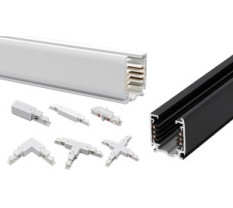
Treat six-wire as the family identification
Start by requesting the proposed rail drawing, including the cross-section and accessory interfaces. The conductor designation alone cannot confirm the mating profile, material or installation detail. A defined model reference lets a buyer compare like with like when several quotations use similar-looking rail photographs or shortened product descriptions.
For a replacement request, send an end-view image, an adapter image and any visible model marking from the retained installation. Describe which pieces need replacement and which are expected to remain. That distinction matters because a new model cannot be assumed compatible with an old rail or head merely because both have been described using the same wire count.
Describe the control requirement in its own words
If the project designer has a grouping or dimming requirement, include it separately from the rail family label. State the intended operation and ask for it to be checked against the particular model documents at enquiry, including both specification and drawing. The six-wire conductor name must not be converted into a circuit count or treated as proof of load capacity.
The same discipline applies when the plan changes. Adding heads, altering their type or changing a control request needs model-level review; a family name remains only a family name. Use the wire-count selection guide to keep the list of electrical questions separate from the geometrical count of rails and connectors.
Confirm the particular head and adapter pair
Every proposed head needs a wire-system and voltage match with the selected rail. Ask for that match using both model references, including the adapter. A head family can offer useful choices for a lighting design without making every head in that family suitable for every rail. Check the actual combination before releasing quantities.
Our related light families include GU10 complete-light and housing options together with MR16 lights and housings, COB heads and E27 lights and bodies. Keep a finished luminaire distinct from an assembly housing or body. For a COB variant described as adjustable-focus or dimmable, confirm the exact head scope and intended rail combination instead of attaching that property to the six-wire rail format.
Make each junction visible in the take-off
Walk the drawing from power entry to the end of each leg. Record the straight connections between rail pieces, the corners and any branch junctions. Conventional parts cover end caps and end parts, power feeds, straight joiners and connectors for L, T or cross junctions. Their matching references, orientation, continuity and polarity details need confirmation with the selected rail model.
A starting take-off can come from the track parts calculator. It uses your lengths and an assumed stock length, counting each leg separately. It does not choose the rail model or validate an electrical design. For a complex branch, attach the marked ceiling drawing and identify the junction locations rather than expecting the total length to explain them.
Settle mounting and finish without borrowing specifications
Identify whether the proposed installation is surface mounted, recessed or suspended. Include the ceiling construction and any section details that affect the rail interface. A recessed opening and a suspended drop create different accessory questions, so those conditions need to be visible before the mounting parts are selected. Confirm fixing spacing for the selected model and ceiling when planning six-wire mounting.
Rated current and voltage, warranty, head compatibility, rail material, finish, wall thickness and length vary by model. Confirm black and white finishes for the selected model when reviewing six-wire options. Request these fields against the actual reference rather than applying a specification from another family. Keep the finish discussion coordinated across the rail, heads and connectors, while checking their physical fit independently.
Separate assembly quantities from site quantities
An assembly order and an installation order may organise quantities differently. State whether the components are intended to become individual packaged runs or to enter a separate assembly process. Keep the same rail and matching-part identities in both schedules, and identify the proposed packaging arrangement per project. That makes the requested supply understandable without asking a kit label to explain how the buyer intends to handle the parts after receipt.
Send the six-wire package for a coordinated review
An effective request includes a dimensioned route, required quantities, the intended head scope, mounting conditions and destination market. Request certificate files where required: applicable models carry CE marking and RoHS documentation, and the file should correspond to the exact model. Put any outstanding model-selection question beside the relevant item on the schedule.
Sampo supplies rails and parts for OEM and assembly customers as well as complete matched-run enquiries. Discuss housings and structural components using a drawing or sample; include project requirements for packaging and branding. Send the latest drawing and family request through the contact form, and identify the separate matters that require confirmation before the component list becomes an order.