Track lighting kits built around a complete run
A lighting track kit is most useful when its contents correspond to a particular route on the ceiling. The rail lengths, heads, feed, connectors and end parts should work together as one proposed assembly, with mounting needs identified alongside them. Sampo supplies coordinated conventional rail, head and parts combinations, alongside separate component and rail orders. Start a kit enquiry with the run drawing so the contents can be checked against a visible layout.
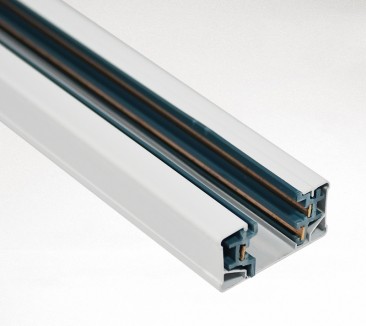
Define the route before calling it a kit
Mark every leg dimension, turn and branch, and identify the intended supply position. A kit described only by total rail length leaves the junctions unclear. Straight and cornered layouts can require different connection lists even when their overall distance is alike. Show the mounting route as surface, recessed or suspended so the installation discussion has a defined starting point.
For several runs, give each one its own label and schedule. That keeps an accessory intended for one location from disappearing into a combined quantity. If layouts repeat, show which dimensions and components repeat and which differ. The purchasing list should remain readable enough for someone to follow each route from power entry to its finished ends.
Count rails and joins leg by leg
The parts calculator uses your run dimensions and assumed stock length to produce an initial rail and joiner count. It counts each leg separately rather than dividing a whole cornered route by one length. The assumed stock length is a visitor planning input requiring confirmation for the selected model.
Review the result with the sketch in view. Straight joiners connect pieces within a leg, while corners and branches need their own matching accessories. Confirm the exact connector references, orientation and continuity arrangement at enquiry. An organised kit list should make these pieces visible rather than place every connection inside a single unnamed accessories line.
Name what is supplied as a head
A kit can include complete luminaires or involve heads and bodies intended for assembly. For kit planning, our related families cover Complete GU10 or MR16 lights, alongside the housings for each family, E27 lights and bodies, and COB heads in adjustable-focus or dimmable variants. Keep those offers distinct in the requested kit scope instead of assuming that every head description means a finished light.
Confirm each exact head and adapter against the rail wire system and voltage. If a buyer wants a lamp supplied with a particular head, list that question separately. The GU10 kit discussion provides a focused way to organise a lamp-based request, while the rail model remains the anchor for compatibility.
Include power entry and the finished ends
The feed position belongs on the drawing and in the kit schedule. The calculator uses one feed as its baseline for a continuous run, with model and project confirmation still required; a long loop may need a second feed point. Identify every open end and ask for matching end caps or end parts for the chosen rail.
A wire-format name describes the conductor arrangement only. Do not use it to derive a circuit count or claim grouping, dimming or load capability. When reviewing kit scope, ask for a model-level check at enquiry: its drawing and specification must confirm grouping, load and dimming. The kit format does not remove that model-level electrical check.
Keep installation fittings in the same purchase conversation
The ceiling construction determines which mounting questions need attention. A recessed route requires the selected profile detail and ceiling build-up to be coordinated. A suspended route needs the drop and ceiling fixing condition. Confirm fixing spacing for the selected model and ceiling when planning kit mounting. Ask for the proposed installation accessories alongside the rail rather than assuming they follow automatically from a kit label.
Confirm black and white finishes for the selected model when reviewing kit contents. Kit listings are also described as bronze track lighting kits, linear track lighting kits or modern LED track lighting kits, and a track light hanging kit is the suspended version of the same idea; treat finish, shape and mounting words as filters to check against the selected model rather than as separate kit families. Review the rail, heads, connectors and visible mounting parts together where appearance matters. Ask for length, material, wall thickness, rated voltage and current, compatible heads and warranty against the exact selection. A kit quotation is easier to compare when these fields remain attached to identified models.
Treat outdoor use as an exact-rating question
For any proposed outdoor or exposed location, confirm the rating and suitability of the exact rail, head and accessory models before ordering or installation. Describe the actual environment, including exposure and mounting conditions, to the project’s qualified electrical professional. A general lighting track kit description cannot establish suitability for those conditions.
Keep this question separate from room styling or the appearance of a head. A finish colour or a robust-looking profile is not an environmental rating. If the intended location changes during design, revisit the model selection and installation requirements rather than moving an indoor-style parts list to a new setting without review.
Turn the kit enquiry into an itemised proposal
Send the current drawing, initial count, desired head scope, required quantity and destination market. Ask for the certificate file for the specific model when needed; applicable models carry CE marking and RoHS documentation. Record any packaging or branding arrangement with the kit request, especially where separate kits must remain identifiable during assembly or site distribution.
Sampo can discuss a matched rail, head and parts set or a separate components order for OEM and assembly customers. Send the layout through the kit enquiry with a clear list of what is wanted as complete supply and what will be assembled separately. That distinction gives the quotation a practical scope from the start.